06

Electric Mobility · Battery Operations · Field Service

AFS Battery Management System

Battery Inventory, Field Operations & Lifecycle Traceability for Electric Mobility
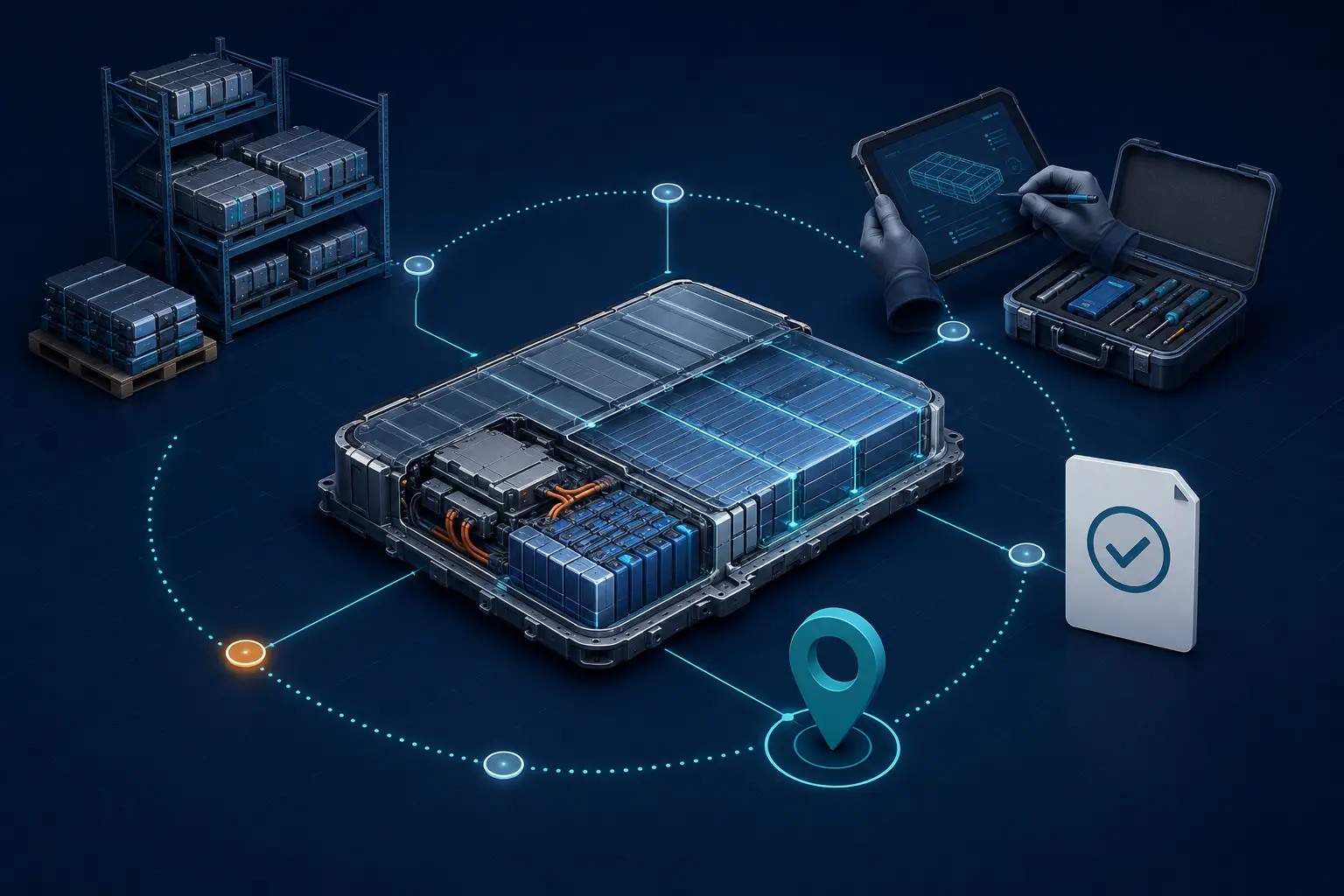
Realistic anonymous operators scanning and handling electric vehicle batteries
Case Study 06Electric Mobility
Realistic Project SettingBattery digital twin

01 / Project overview

The product in context.

The AFS Battery Management System organizes the movement and operational history of EV batteries across procurement, warehouse, technician tasks and field operations.

02 / The challenge

Making the operating model explicit.

A battery can move through warehouses, motorcycles, technician tasks, replacement and repair scenarios. Each movement needs a consistent identity and history so operational teams can understand where the asset is and what has happened to it.

03 / System complexity

Complexity, represented clearly.

These indicators describe the scale and structure of the system. They are not performance metrics.

3Operational roles

Superadmin · Admin · Technician

4Field scenarios

Deploy motorcycle · Deploy battery · Replace · Repair

1Core traceability principle

Every battery movement should be traceable

04 / My role

Contributions across the product lifecycle.

01

Product Manager

A documented area of contribution to the project.

02

Business Analyst

A documented area of contribution to the project.

03

Product Validation / UAT

A documented area of contribution to the project.

04A / What I delivered

Turning responsibilities into tangible project value.

01

Requirements & process structure

Translated business context into explicit workflows, rules and functional structure represented in this case study.

02

Product scope & alignment

Connected priorities, stakeholders and delivery decisions around a coherent product lifecycle.

05 / Business process

From business steps to a connected workflow.

ProcessCore lifecycle
  1. 01Procurement
  2. 02Warehouse
  3. 03Task
  4. 04Technician
  5. 05Field Operation
  6. 06Location History
  7. 07Reporting

06 / Solution

A structured solution to the business need.

A battery digital twin concept that connects a battery's identity to its current location, movement history, task history and workorder history, with an integration point to Odoo.

ProcessConceptual integration map
  1. 01Core platform
  2. 02Odoo

07 / Key modules

Core functional components.

01Battery ID
02Serial Number
03Current Location
04Movement History
05Task History
06Workorder History
07Technician Assignment
08Reporting

08 / Product visual

A conceptual view of the product.

Conceptual reconstruction — not original production UI. This sanitized portfolio visual communicates the system model without exposing confidential documents, data or interfaces.

NDA-safe conceptual reconstruction
System overviewBattery digital twin

A digital identity and history for every mobile battery asset

  1. 01Procure
  2. 02Store
  3. 03Deploy
  4. 04Replace
  5. 05Repair
Core capabilities
  • Unique identity
  • Location history
  • Work orders
Business impact
  • Asset traceability
  • Field visibility
  • Reliable history
Design principleSystem · Process · People · Control

09 / Business value

Qualitative business value.

For current and ongoing work, value is presented qualitatively. No unverified performance claims are used.

01Battery lifecycle traceability
02Improved location visibility
03Connected field and warehouse records
04Structured workorder history
05Clearer technician assignments
06Consistent operational reporting

10 / Professional proof

What this project demonstrates.

Product ManagementBusiness AnalysisAsset TraceabilitySystem IntegrationProduct Validation
Key takeaway
For mobile operational assets, identity and movement history are the foundation of reliable lifecycle management.